The survey
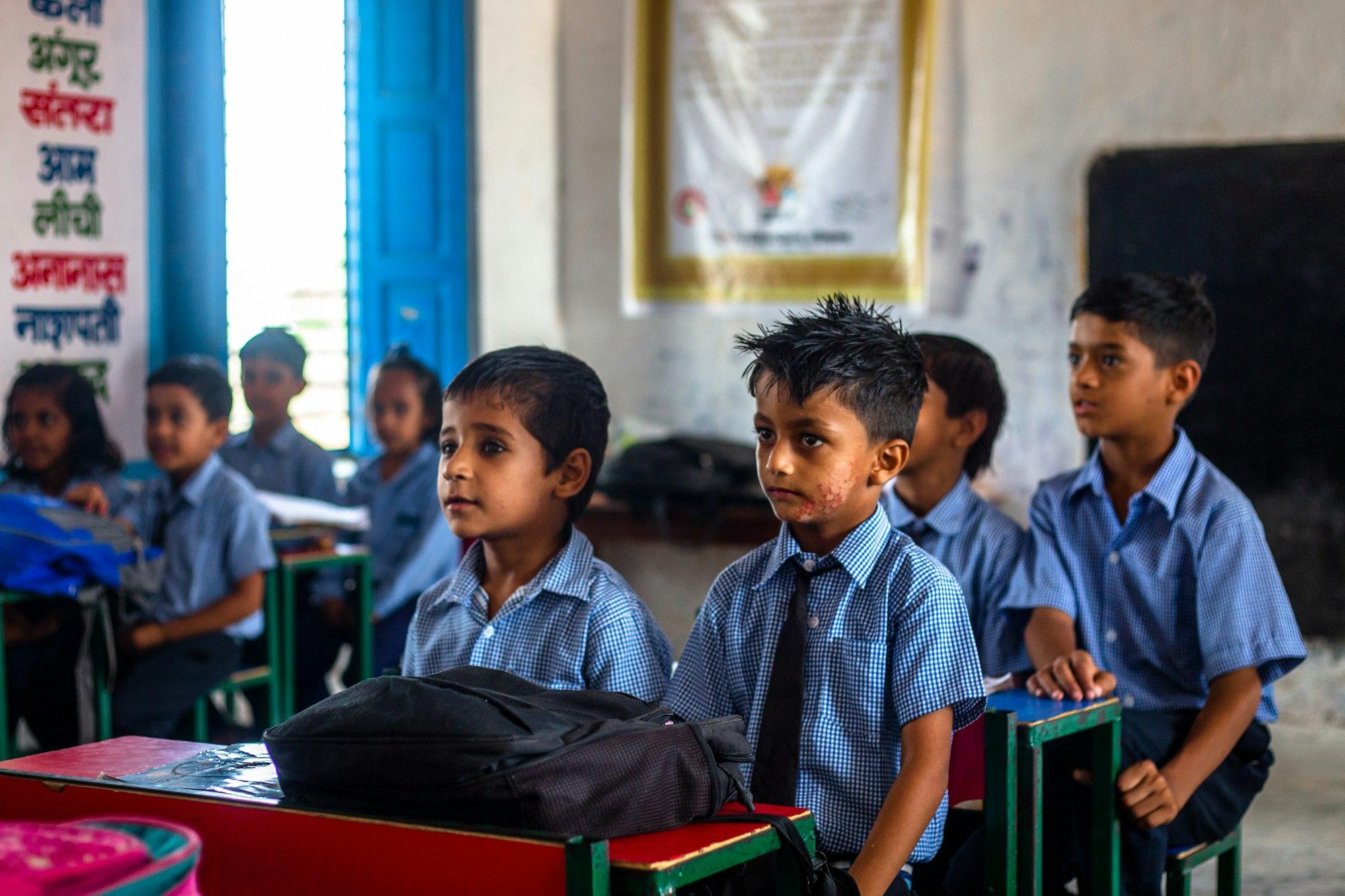
The Annual Status of Education Report (ASER) is facilitated by Pratham. ASER 2024, released in early 2025, reached 649,491 children aged 5 to 16 in 17,997 villages across 605 rural districts. Children are tested at home, not at school, so the survey includes children who are not enrolled or did not attend that day.
Foundational learning has recovered
After the fall in learning during school closures, the 2024 results show a clear recovery, led by government schools.
Rural India, better on every count
Class III children who can do a two-digit subtraction
20.9%
2018
27.6%
2024
+6.7 points
Class V children who can do a division sum
20.7%
2014
26.5%
2024
+5.8 points
Children in pre-primary at age 5
58.5%
2018
71.4%
2024
+12.9 points
15 and 16-year-olds out of school
16.6%
2014
7.9%
2024
−8.7 points, fewer out of school
Reading recovered too: 23.4% of Class III children in government schools could read a Class II text, the highest level since ASER began measuring it.
The survey's authors link the gains to the national focus on foundational literacy and numeracy since 2020.
But most young children are still behind
Recovery is not the same as success. Even at its best level on record, fewer than one in four Class III children in government schools can read a text meant for Class II. And almost three in four Class III children cannot yet do a two-digit subtraction.
Fewer than one in four Class III children in government schools can read a Class II text. That is the best result on record.
More children start school early and stay longer
Pre-primary enrolment at age 5 and the share of 15- and 16-year-olds out of school both moved the right way, as the figure above shows. For girls in that older age group, though, the share out of school remains above 10%.
Teenagers and smartphones
For the first time, ASER asked 14- to 16-year-olds about digital access and skills.
- Nearly 90% live in a household with a smartphone, and 82.2% know how to use one.
- In the previous week, 57% had used one for something educational, and 76% for social media.
- Among social media users, 62% knew how to block or report a profile, 55.2% how to make a profile private, and 57.7% how to change a password.
What schools can take from this
ASER covers rural India and mostly government schools. A private CBSE or international school in a city will see different numbers. The lessons still travel.
- Check foundations, whatever the grade. Gaps in reading and arithmetic follow children up the school. A short reading and arithmetic check at entry to each stage finds them early.
- Teach online safety as a skill. Close to half of teenagers on social media do not know basic privacy settings. That is teachable in a single lesson.
- Use the phone that is already at home. With smartphones in most households, messages and resources for families can reach almost every home.
Sources
- ASER Centre, ASER 2024 (Annual Status of Education Report, Rural).
- Pratham UK (February 2025), Unveiling Pratham's Annual Status of Education Report 2024.
- Press Information Bureau, Government of India (February 2025), ASER 2024 key findings, for the digital figures.